Named in Grant Thornton's 100 Ones to Watch 2026, their list of hospitality, retail and travel technology companies. See the list
Ask Book

You know their name, their room type, and almost nothing else.

We ask. Then we offer what fits.

They booked eight weeks ago. They arrive on Friday. You do not know that it is her mother's eightieth, that they want a table at eight, or that they would have paid for the suite.

Show us where pre-arrival gets stuck. Nothing to prepare.
How it works today

A booking confirmation, and then silence.

Today

01Book dinner

Guest friction

The guest gets a table booking email which gets lost in the noise.

Team friction

Reception becomes the middleman between the guest and restaurant.

Today

02Mark an occasion

Guest friction

Nobody asked why they were coming, so the anniversary feels like any other stay.

Team friction

The team finds out at check-in, too late to prepare anything.

Today

03Plan the stay

Guest friction

The pre-arrival email asks them to click into a booking engine to do anything.

Team friction

Someone spends an afternoon ringing guests, and reaches one in five.

The pain

You are already doing pre-arrival. That is rather the problem.

Most hotels send a pre-arrival email. Some run a pre-arrival call. The email is a good record of the booking, but it goes out on a schedule, says the same thing to everyone, and asks the guest to click into a booking engine to act on it.

The call reaches maybe one guest in five, and costs a member of staff an afternoon. Neither of them asks the question that makes everything afterwards work.

The easiest route

We make the tech work around your hotel.

Easier for the guest rarely means another app. We use whatever takes the least effort for the thing they are trying to do, which is often a conversation and occasionally a page.

When a reply will do

A conversation

Asking why they are coming, offering a table and confirming it takes a few replies on WhatsApp, SMS or whichever channel the guest already uses. They answer the way they would answer anyone else.

When there is something to choose

A page

Three spa treatments, two suites, a menu. Choosing is easier with room to look, so we build a page for it, laid out to be taken in at a glance, and link it from the conversation.

Then we connect it to the systems you already use, around the way your hotel runs day to day, and change as little as possible.

Purpose of stay

Why are they coming?

Our Q1 Pre-Arrival Revenue Report, drawn from 20,000+ recent guest conversations, found 26% of guests were celebrating a birthday and 10% an anniversary. Another 29% were visiting friends. Country house properties skew towards celebrations. City hotels skew towards visiting friends.

That one answer changes every offer that follows. Champagne matters enormously for an anniversary and is noise on a Tuesday business stay.

It also reaches your team. The answer is added to the reservation and printed on the morning briefing, so the person on shift knows it's an anniversary before the guest arrives, and it stays on the guest's record for the next time they come.

We ask every guest, in conversation. Every offer after that is picked for their stay.

Timing

The right moment is not the same at every hotel.

There is a window. Positive response peaks between 24 and 72 hours before arrival. But the peak moves depending on what you are offering, and on how far ahead your guests plan. A room upgrade lands best around 24 hours out, while the room is still empty and the guest is already packing. Dinner is a different problem. At some properties four to seven days is right. At others it needs thirty, because guests decide where they are eating long before they decide anything else.

So we do not arrive with a schedule and apply it to you. We watch what your guests do and adjust as we learn. When your goals change, the sequence changes with them: a quarter spent filling the spa is not the same as a quarter spent filling the restaurant. You do not have to think about any of it.

Positive response to a pre-arrival message, by when it is sent Highest one and two days before arrival, at 51.2% and 50.0%. Same day 22.6%, three days 23.8%, four to six days 38.2%, one to two weeks 21.9%, more than two weeks 30.1%. 24 to 72 hours 2+ weeks before arrival: 30.1% positive 30% 2+ weeks 1 to 2 weeks before arrival: 21.9% positive 22% 1 to 2 weeks 4 to 6 days before arrival: 38.2% positive 38% 4 to 6 days 3 days before arrival: 23.8% positive 24% 3 days 2 days before arrival: 50.0% positive 50% 2 days 1 day before arrival: 51.2% positive 51% 1 day Same day before arrival: 22.6% positive 23% Same day Arrival →
Positive response by send timing
SentPositive response
2+ weeks30.1%
1 to 2 weeks21.9%
4 to 6 days38.2%
3 days23.8%
2 days50.0%
1 day51.2%
Same day22.6%
Positive response to a pre-arrival message, by when it was sent. Q1 Pre-Arrival Revenue Report, 20,000+ guest conversations. The shape holds across properties. The peak is yours.
What gets offered

Offers chosen for the stay.

Tables. Room upgrades. Spa treatments. Celebration extras. Early check in, late checkout, parking.

Early check in and checkout requests draw a positive response 71% of the time. Spa sits at 27% and dinner at 19%, so spa converts around 41% better than dinner. That is the opposite of the order most hotels send them in. Occasion-led messages outperform every standard category, at roughly 80% positive. That sits on a smaller sample, so treat it as a strong signal rather than a settled number.

Positive response to a pre-arrival offer, by type Celebration or occasion 80.0%, on a smaller sample. Early check-in or late checkout 70.8%. Spa and treatments 26.7%. Dinner and restaurant 18.9%. Celebration or occasion: 80.0% positive (indicative, smaller sample) Celebration or occasion 80% · smaller sample Early check-in or late checkout: 70.8% positive Early check-in or late checkout 71% Spa and treatments: 26.7% positive Spa and treatments 27% Dinner and restaurant: 18.9% positive Dinner and restaurant 19%
Positive response by offer type
OfferPositive response
Celebration or occasion (indicative)80.0%
Early check-in or late checkout70.8%
Spa and treatments26.7%
Dinner and restaurant18.9%
Positive response to a pre-arrival offer, by type. Q1 Pre-Arrival Revenue Report. The hatched bar is a smaller sample.
Who runs it

Your team never has to run it.

There is no template library, campaign or sequence for anyone at the hotel to maintain when the restaurant changes its sittings. You tell us what you want to say. We shape it for the channel, set it in your voice, send it at the right moment, and keep tuning it while it is live.

Where something needs to reach your team, it lands where they already look. On Opera that is a trace on the reservation in the standard view. Whatever you run, we work out where your people already are and put it there.

  • Asking why the guest is comingBiteluxe
  • Shaping each message for its channel, in your voiceBiteluxe
  • Sending at the right moment for each offerBiteluxe
  • Checking availability before anything is offeredBiteluxe
  • Tuning the sequence as your goals changeBiteluxe
  • Replying when a guest needs a personYour team
What hotels see

The range across our properties.

Where a property sits depends on how far through optimisation it is, and every property starts nearer the bottom of the range than the top.

33% to 79%

Reply rates across our properties

From early stage to optimised
15% → 47%

Intent rate, early stage to optimised

Optimised properties run from 41% to 47%
2.3×

Ancillary revenue

Properties that get the sequencing right, against those that do not

The Queen at Chester

Joji Esao, Hotel Manager

“Every week we're seeing stronger numbers than last year.”
Before
Guests made dinner plans before the hotel's offer reached them, and ate out.
What changed
We replaced both with one pre-arrival conversation on the guest's own channel.
Dining uptake doubledIn-house dining, after the pre-arrival invitation changed
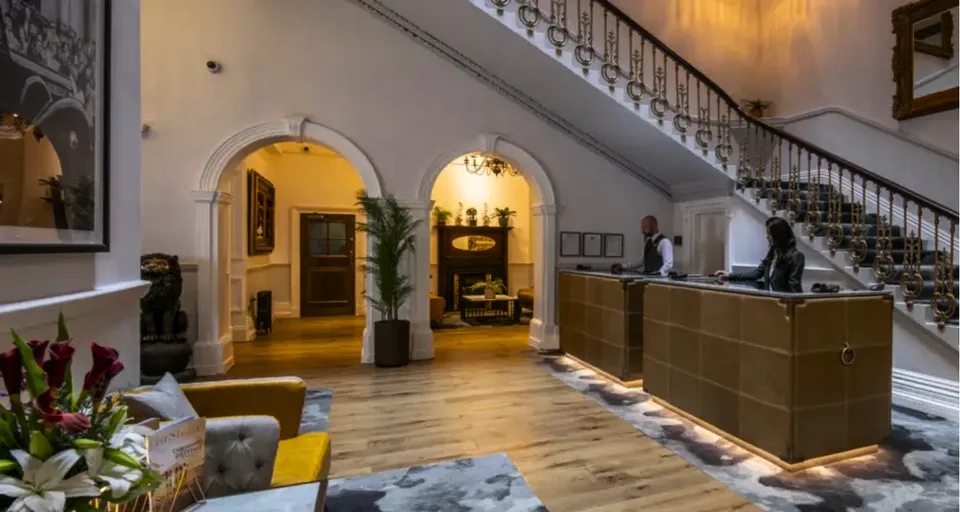
The Queen at Chester, reception

Read the case study   All results

Bring us one action

Start with the offer your guests never see.

01

Thirty minutes

Show us the action that is harder than it should be. We will tell you honestly whether we can improve it.

02

One session

We map what the guest is trying to do, what the team needs, how the brand should sound and where the existing systems help or get in the way.

03

Three weeks

The work is ours: we build the journey, shape the messages, connect it and test it.

04

Fifteen minutes

We walk the relevant team through the small part they will see.

05

Two months

Prove it in the operation before making an annual commitment.

Book thirty minutes Show us where pre-arrival gets stuck. Nothing to prepare.
Built around your hotel. Managed by us.

What are your guests trying to do that is harder than it should be?

Bring us the action, the brand, the awkward systems and the operational reality. We will shape the message for each channel and build the easiest route through them.

Show us where guests get stuck. Nothing to prepare. Sometimes the honest answer is that you do not need us.