

A guest checking whether they can bring their dog needs a quick answer. A couple choosing a room upgrade needs to see the options. Someone paying a deposit needs to know what they are paying for and recognise the hotel taking the payment.
Each task calls for a different approach.
For hotel guest messaging, WhatsApp suits conversations, SMS suits short updates, email suits detailed information and records, and website chat helps people while they browse. Dedicated web pages give guests space to compare, complete a form or pay. The right combination depends on the guest's preferences, the task and how the hotel will handle the response.
Hotel messaging channels at a glance
| Channel or destination | Useful for | What to consider |
|---|---|---|
| Pre-arrival conversations, questions and in-stay requests | Whether the guest uses it, messaging permission and a clear route to the team | |
| SMS | Short reminders, arrival updates and links to a next step | Recognisable sender, concise wording and whether replies are supported |
| Confirmations, itineraries, proposals, receipts and detailed information | A clear subject line, readable layout and one obvious next action | |
| Website chat | Questions about rooms, facilities and booking while browsing | Accurate answers, a route into booking and continuity if the guest leaves |
| Dedicated web page | Payments, registration, choices and structured requests | Mobile usability, appropriate security and consistent hotel branding |
When should a hotel use WhatsApp?
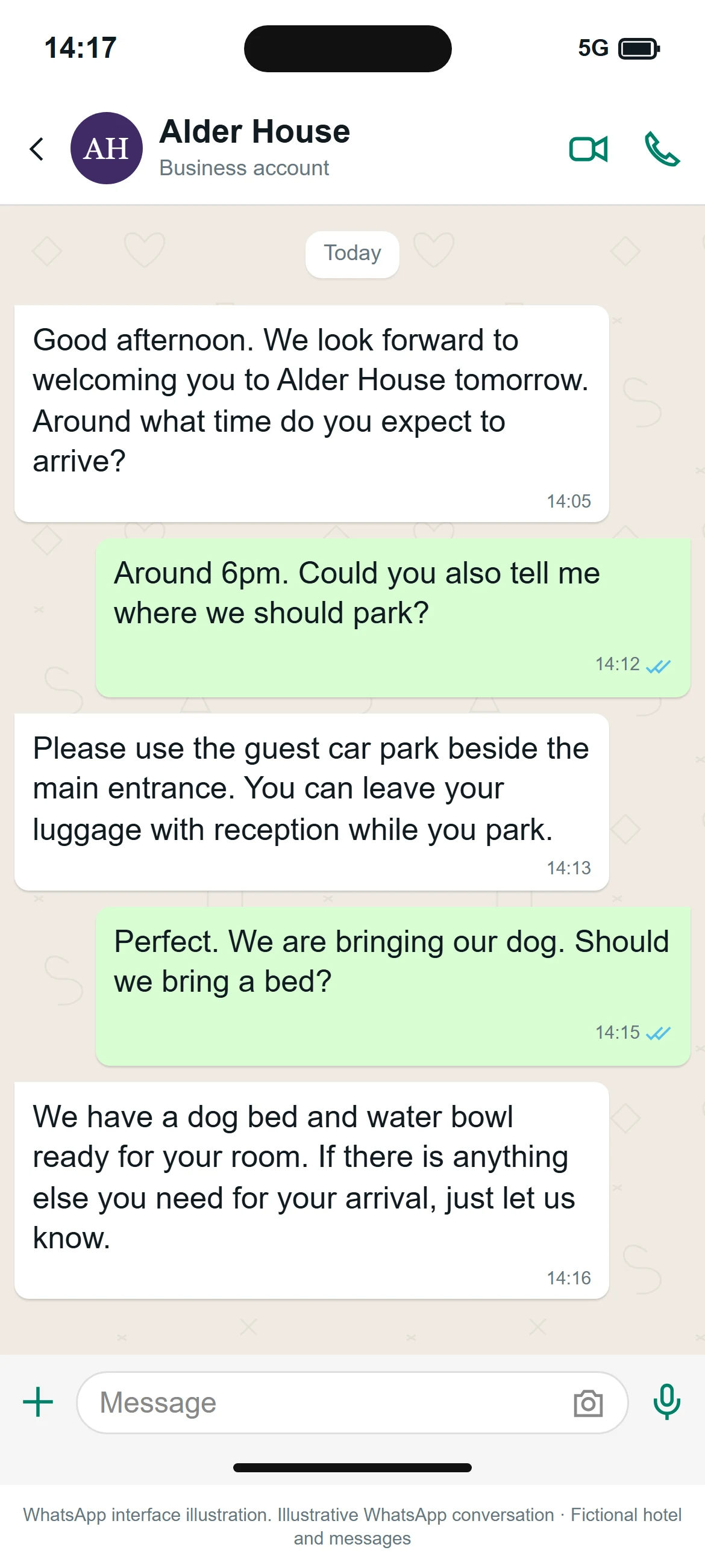
WhatsApp works well when the guest is likely to reply and the exchange may need a follow-up question.
Before arrival, that could mean asking about arrival time or helping arrange dinner. Our approach to pre-arrival guest messaging explains how that conversation fits into the stay. During the stay, it could mean a request for fresh towels or advice about the local area.
Keep the first message focused. Asking whether a guest would like help with dinner gives them a straightforward way to respond. Listing the restaurant, spa, room upgrades and every available extra makes the conversation harder to follow.
The hotel also needs a process behind the answer. A dinner request should reach someone who can check availability. A maintenance issue needs a responsible team and a record of what happened.
WhatsApp requires planning for business messaging. Its Business Platform uses approved templates to initiate conversations, and free-form replies are permitted within 24 hours of the guest's latest message. Permission and opt-out handling also matter. WhatsApp's Business Messaging Policy.
When is SMS a good choice for hotels?
SMS is useful for a short update that needs little explanation. It can also provide an alternative for guests who do not use WhatsApp, where the hotel has permission to contact them.
A room-ready notification, an arrival reminder or a link to complete registration can fit comfortably into a text message.
Make the hotel recognisable in the wording. Explain the reason for any link and what the guest will find when they open it. An unexplained payment link from an unfamiliar sender gives the guest good reason to hesitate.
Check the reply route too. Some SMS sender arrangements support two-way messaging; others do not. If guests cannot reply, tell them how to reach the hotel.
Use delivery information and completion status to guide any follow-up. Switching channels should solve a specific problem, such as a failed delivery. Sending the same reminder by text, WhatsApp and email can create unnecessary interruptions.
What should hotels keep on email?
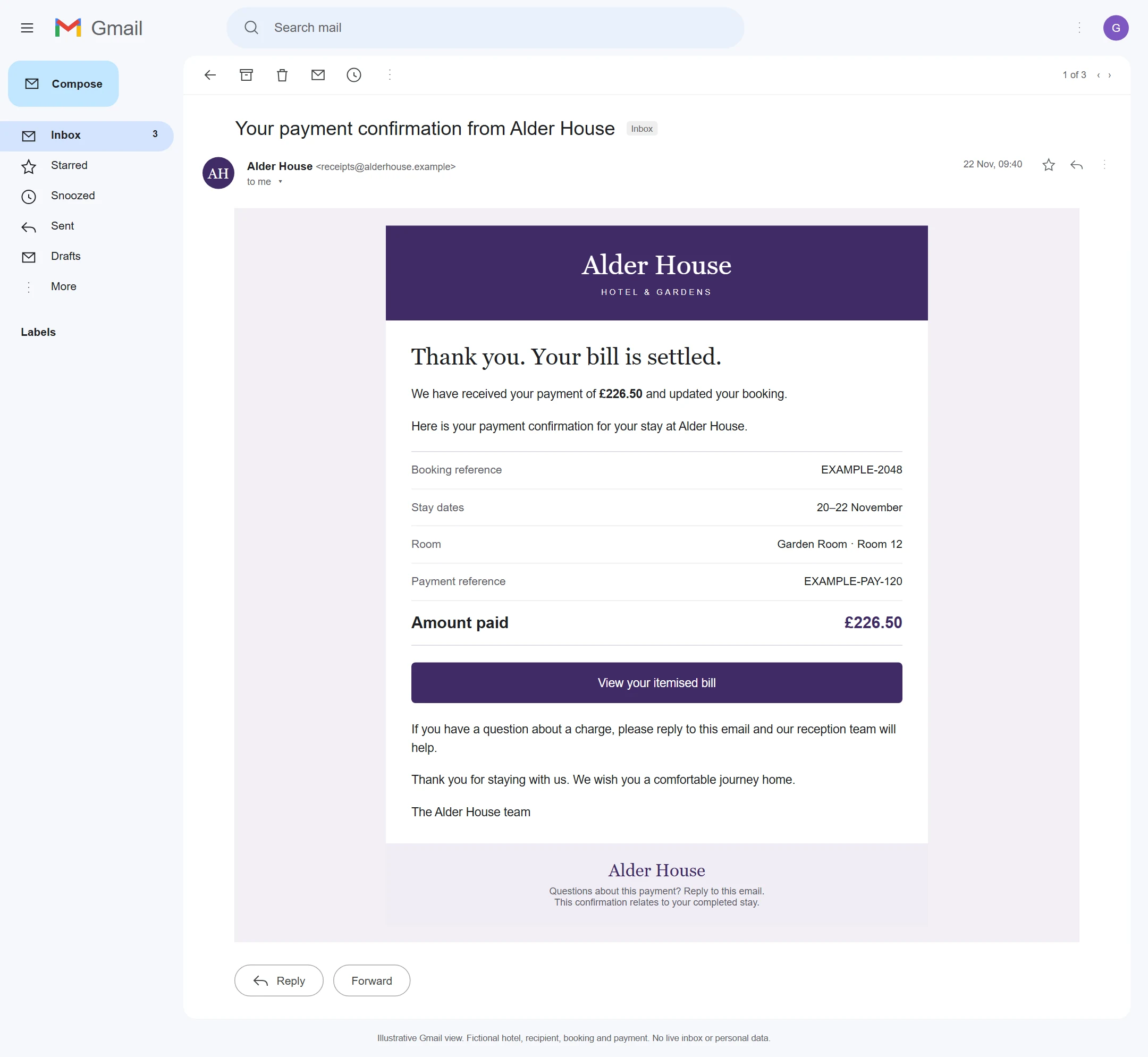
Email gives guests room to read, keep and forward information.
Booking confirmations, detailed itineraries, event proposals and receipts are natural uses. A guest organising a family visit may need to share arrival information. An event organiser may need colleagues to review a proposal before paying a deposit.
Structure the email around that task. Put the essential information near the top, then give the reader a clear next step. A deposit email should explain the amount, what it secures and where to pay.
Email can also support a conversation that began elsewhere. A guest might arrange something through WhatsApp and receive the confirmed details by email, if that suits them.
Where does website chat fit into the guest journey?
Website chat is useful while a prospective guest is looking at the hotel and deciding whether to book.
Questions about parking, accessible rooms, restaurant opening days or a particular package can arise in the middle of browsing. A helpful answer should let the visitor continue from where they are.
If they need to compare rooms or check dates, offer a direct route to the relevant page. Where live availability is unavailable to the chat service, explain how it can be checked.
Plan for the visitor leaving the website. If the enquiry needs follow-up, offer a way to continue through their preferred channel, with the appropriate permission. Pass the relevant details to the team so the guest can pick up where they left off.
When should a hotel use a dedicated web page?
A dedicated page is useful when guests need to review several details, make a choice or complete a structured task.
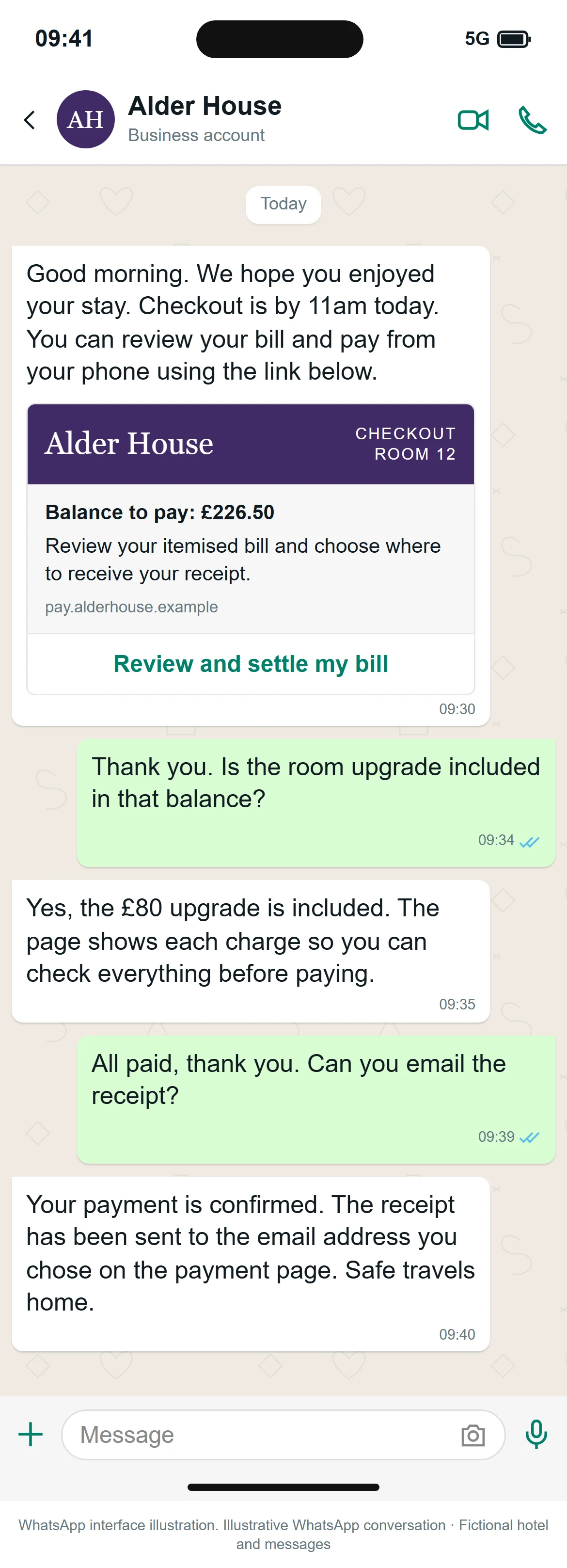
For example, room upgrades may be easier to compare with photographs, prices and a short explanation of what changes. A registration form can collect several arrival details together. A payment page can show the balance and give the guest a clear route to pay.
Keep a simple question in the conversation. If all the hotel needs is an arrival time, a reply may be enough. Use a page when its layout or functionality makes the task easier.
Payment pages
A hotel payment page should explain the amount, currency, purpose of payment and relevant booking details. For checkout, it may also need to show an itemised bill before the guest proceeds. See how hotel payment links can fit into the conversation.
Direct card entry to the payment provider's secure checkout. Give guests a way to contact the hotel if something looks wrong, and show a clear confirmation once payment succeeds.
The confirmation matters to the team as well. The payment result should reach the relevant booking or finance process so staff can see that it has been settled. A click on the link alone does not confirm payment.
Registration and booking pages
Use a form when the hotel needs several related details, a signature or an explicit choice. Ask only for information needed for that task and make the page comfortable to use on a phone. Our online check-in and checkout page shows where these steps fit into arrival and departure.
For dining, spa or experiences, a page can help guests browse times and options. Be clear whether they are making a confirmed booking or submitting a request for the hotel to check.
Brand the pages guests arrive on
A message from the hotel creates an expectation about what follows. Carry that identity through to the page.
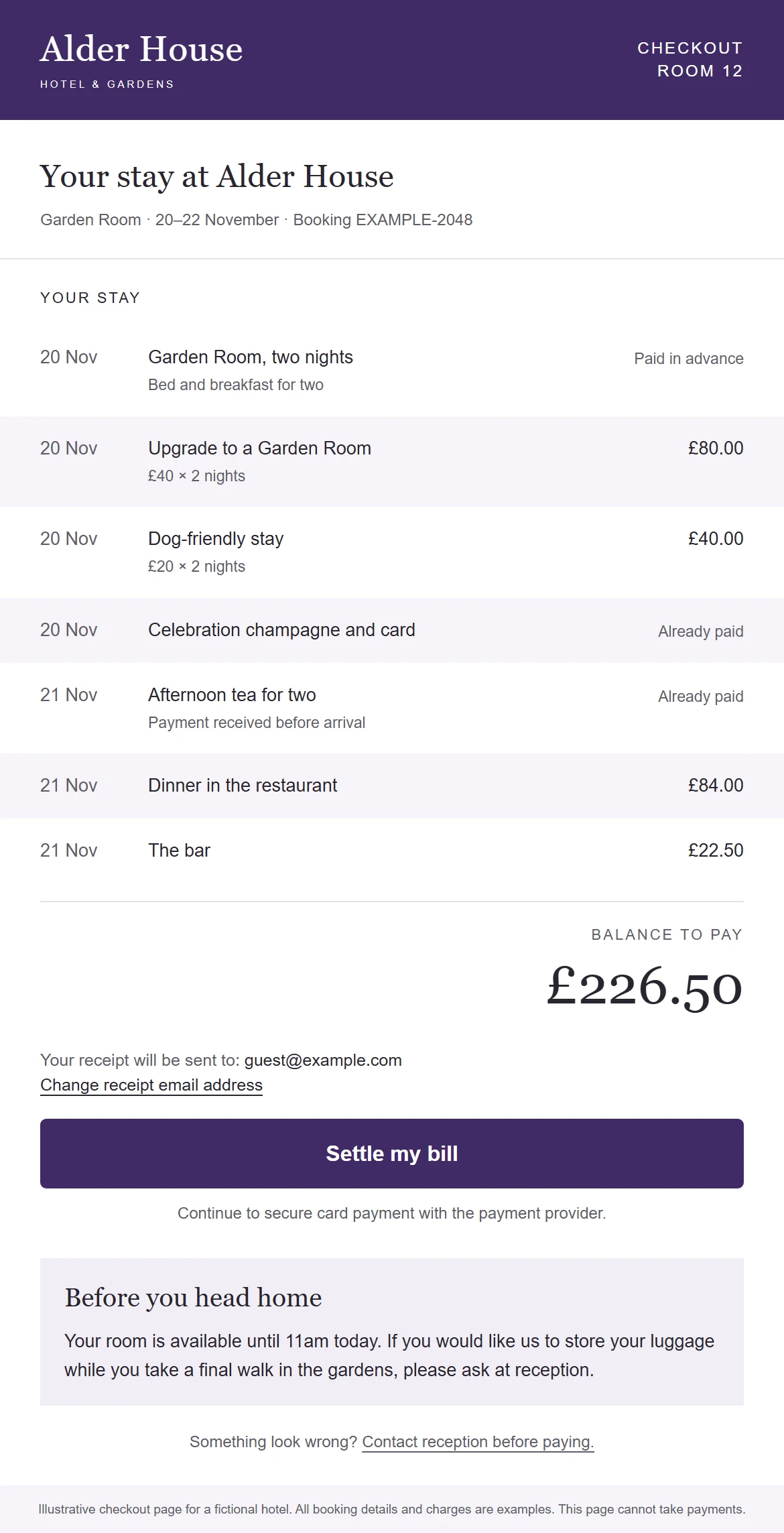
Use the hotel's logo, colours, typography and tone of voice. Where the setup allows it, use a recognisable hotel domain or subdomain. Keep the hotel name and a contact route visible, especially when asking for payment.
If checkout moves to a payment provider's domain, explain the transition and retain the hotel's identity wherever the provider supports it. Branding helps guests recognise the journey; secure handling and access controls still need to work beneath it.
Branding should support a clear layout. Payment amounts, form labels, buttons and confirmation messages need to remain easy to read. A guest using a phone should be able to understand what is being requested without searching through decorative content.
Marketing opt-ins: what can a hotel send before and after a stay?
Plan permission alongside the channel. A guest giving the hotel a phone number for their booking does not automatically agree to future promotional messages.
For UK hotels, distinguish service communications from marketing by looking at the purpose and content of each message. The timing alone does not determine the rules. ICO guidance on marketing and service messages.
Before arrival, keep service messages focused on the booked stay
Arrival instructions, a request for an arrival time, registration details and a reminder about an agreed deposit can help deliver the stay the guest has purchased.
Promotions need a separate assessment. A paid room upgrade or spa discount can be marketing even when it relates to an upcoming visit. Adding an offer to an arrival email can bring marketing rules into play. Review the whole message before sending it.
Keep the purpose clear in the wording. Explain what the hotel needs, why it relates to the booking and what the guest should do next. ICO guidance on direct marketing.
After departure, check permission before sending offers
A return-stay discount, seasonal package or promotional newsletter needs the appropriate marketing permission. The guest's previous stay, an open WhatsApp conversation or a completed registration form does not establish that permission by itself.
For UK electronic marketing to individuals, obtain valid consent unless a permitted exception applies. The products and services "soft opt-in" can apply where the hotel collected the details directly during a sale or negotiations, promotes its own similar services, and offered an opt-out at collection and in every subsequent marketing message. A previous booking alone is insufficient. ICO guidance on the electronic marketing rules.
A receipt or genuine follow-up about an unresolved bill can still be a service communication after checkout. Keep promotional content out of those messages unless the relevant marketing requirements are met.
Make marketing choices clear on branded forms
Booking and pre-arrival forms can provide a convenient place to offer an optional marketing choice. Keep it separate from the details needed to manage the stay.
Where relying on consent, use unticked choices that name the hotel, explain the content and identify each channel. For example:
- [ ] Email me offers and news from [Hotel name].
- [ ] Send me offers and news from [Hotel name] by SMS.
- [ ] Send me offers and news from [Hotel name] on WhatsApp.
Record the wording shown, when and how the guest agreed, and any later withdrawal. Guests should be able to complete registration or payment without agreeing to marketing. Include an easy opt-out in subsequent marketing messages. ICO guidance on consent and electronic marketing.
Apply WhatsApp's platform permission requirements as well. A UK soft opt-in assessment does not replace the platform's rules. WhatsApp Business Messaging Policy.
These examples describe the UK position. Check the requirements applying to the hotel, recipient and channel before using the same process in another market.
Connect the journey around the guest's next step
An illustrative stay might begin with a question in website chat. The booking confirmation follows by email. Before arrival, the guest arranges dinner through WhatsApp. A dedicated page lets them review and pay a balance, with a receipt sent by email.
Every transition should preserve the useful details, respect the guest's preferences and tell the hotel team what has happened. Stop reminders when the task is complete.
Review where guests hesitate, abandon a form or ask the same question again. Those points will help determine whether the wording, channel, page or handover needs attention.
Biteluxe builds and manages guest messaging and connected workflows around the hotel's systems and ways of working. We shape each communication for its destination and the action the guest needs to take. Read how we build and manage hotel guest journeys.
Bring us one point in your guest journey where people get stuck. We can work through the message, the next step and what your team needs to receive.